
The Moment You Notice Something Is Wrong
It usually starts small. You hit the opener button and the door hesitates before it moves, or it rises with a grinding scrape instead of the usual smooth hum. Maybe you walk past the garage and notice the door is sitting slightly crooked in its frame, with a gap on one side that wasn't there last month. Some homeowners catch it visually first — one track looks like it's pulling away from the wall, or there's a wavy dent where the metal should be straight. Others catch it by sound: a rhythmic clunk as the rollers hit a kink in the rail, or metal-on-metal screeching near the top of the travel.
None of these are things to wait out. A door running on a bent or misaligned track puts uneven strain on the rollers, cables, and opener, and it can come off the track entirely while it's moving — which is a heavy, awkward thing to have happen over a car or a driveway full of kids' bikes.
Other Symptoms Worth Paying Attention To
- Uneven movement: the door opens faster on one side than the other, or visibly tilts as it travels.
- Gaps along the bottom seal that weren't there before, letting in drafts or light.
- Rollers popping out of the track briefly during operation, then settling back in.
- The opener straining — motor noise increases, or the door reverses unexpectedly because the safety sensors read resistance as an obstruction.
- Visible separation between the track and the wall brackets, sometimes just a quarter inch, sometimes enough to see daylight.
What a Technician Checks First: Visual Alignment and Hardware
The first thing a technician does is look at the track from the floor up, checking for sections that bow outward, pinch inward, or sit at a slightly different angle than the rest of the run. This is also when loose mounting brackets get caught — the lag screws or bolts holding the track to the wall studs or door frame can work loose over years of vibration from daily opening and closing. A loose bracket lets the whole track shift a little every time the door runs, which eventually bends the metal even if nothing ever hit it.
The fix: re-tightening or replacing hardware is quick and inexpensive. If the bend is minor and the track itself is still structurally sound, a technician can often tap it back into alignment with a rubber mallet and check it against a level, then re-anchor the brackets into solid framing.
Next: Impact Damage
After hardware, the next most common cause is something physically striking the track or the door itself — a car bumper pulling in at the wrong angle, a ladder or bike leaned against the door, a snow shovel or lawn equipment clipping the bottom section. This usually creates a sharper, more localized bend than wear-related sagging, often with a visible crease rather than a gentle curve.
The fix: small dents can sometimes be worked out, but sharply creased or kinked sections are usually replaced outright rather than straightened, since a track that's been bent once is weaker at that spot and more likely to bend again under the same stress.
Then: Roller and Hinge Wear
Old or worn rollers — especially the original steel or nylon ones many houses still have — don't roll smoothly anymore. They start to drag, catch, or wobble inside the track, and that uneven friction gradually pushes the track out of true alignment over months or years. This is especially common on doors that haven't had lubrication or a maintenance check in a long time.
The fix: replacing worn rollers and hinges, then lubricating the full track and hardware. This is routine work, but it's often skipped until something more serious develops, which is why it shows up partway down this list instead of at the top.
Then: Cable or Spring Imbalance
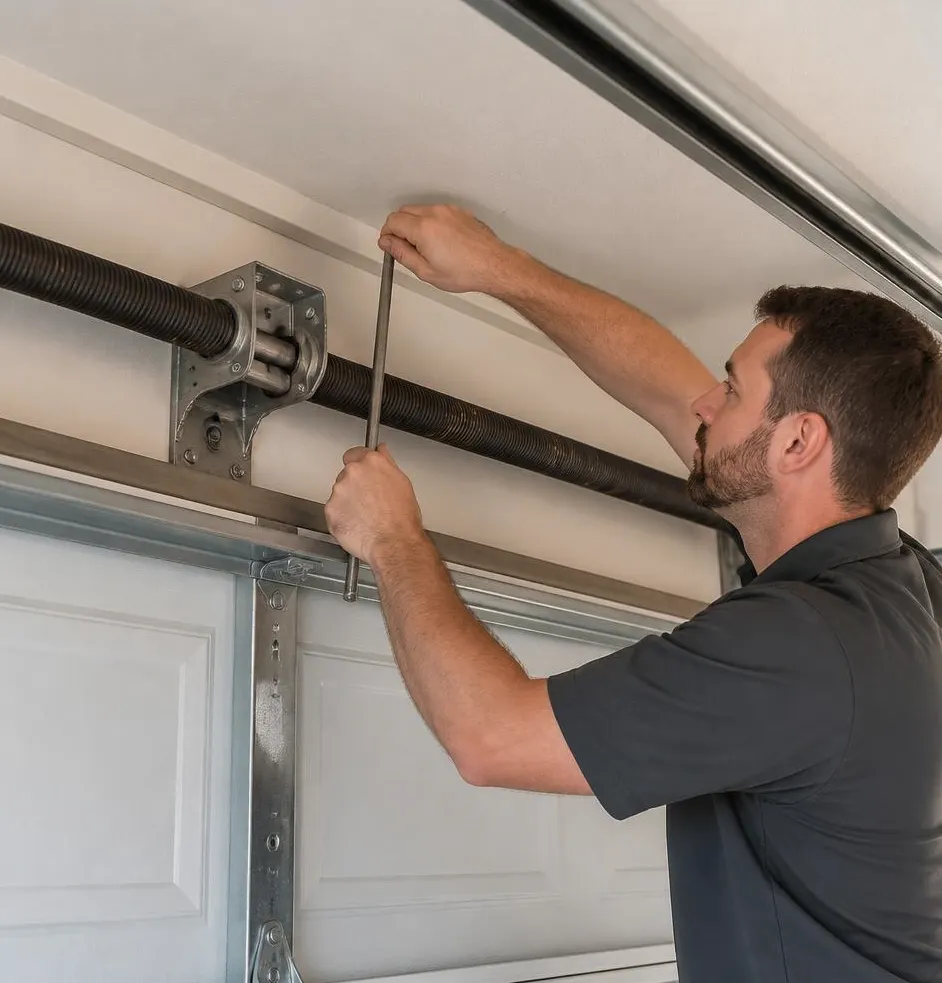
If one side of the door is being lifted unevenly — because a cable has frayed, slipped off its drum, or a torsion spring has weakened or broken — the door physically pulls against the track on that side every time it operates. Over time this torques the track out of shape. This is also one of the more dangerous causes, since broken springs and cables under tension can cause sudden, forceful movement.
The fix: spring and cable repair has to happen before track alignment is addressed, since straightening a track while the lift mechanism is still imbalanced just bends it again. This is not a do-it-yourself repair — torsion springs are under enough tension to cause serious injury.
Finally: Settling, Age, and Weather
In houses with some age on them, minor foundation or frame settling can shift the garage opening just enough to throw off track alignment over years, not months. And Columbus's seasonal swings add their own wear: cold winters bring ice buildup and road salt tracked in on tires, which corrodes brackets and hardware over time, while wide temperature swings between a 70-degree fall afternoon and a hard overnight freeze cause metal to expand and contract, loosening fasteners a little more each cycle. Heading into another Ohio winter, this is a good time to have tracks checked before ice and cold make an existing misalignment worse.
When to Call Columbus Garage Door Pro
If your door is scraping, hanging crooked, or popping off the track even briefly, it's worth getting it looked at before the first hard freeze rather than after. Columbus Garage Door Pro handles everything from straightforward Garage Door Repair to full Garage Door Maintenance visits that catch loose hardware and worn rollers before they turn into bent tracks. If the door has come off the track or a cable has snapped, that's a same-day call — we offer Emergency Garage Door Service across Columbus, Westerville, Dublin, Gahanna, Hilliard, Grove City, Reynoldsburg, and Upper Arlington.
Don't wait for winter ice to turn a minor alignment issue into a door that won't open. Call Columbus Garage Door Pro today to get your tracks checked before the cold sets in.