
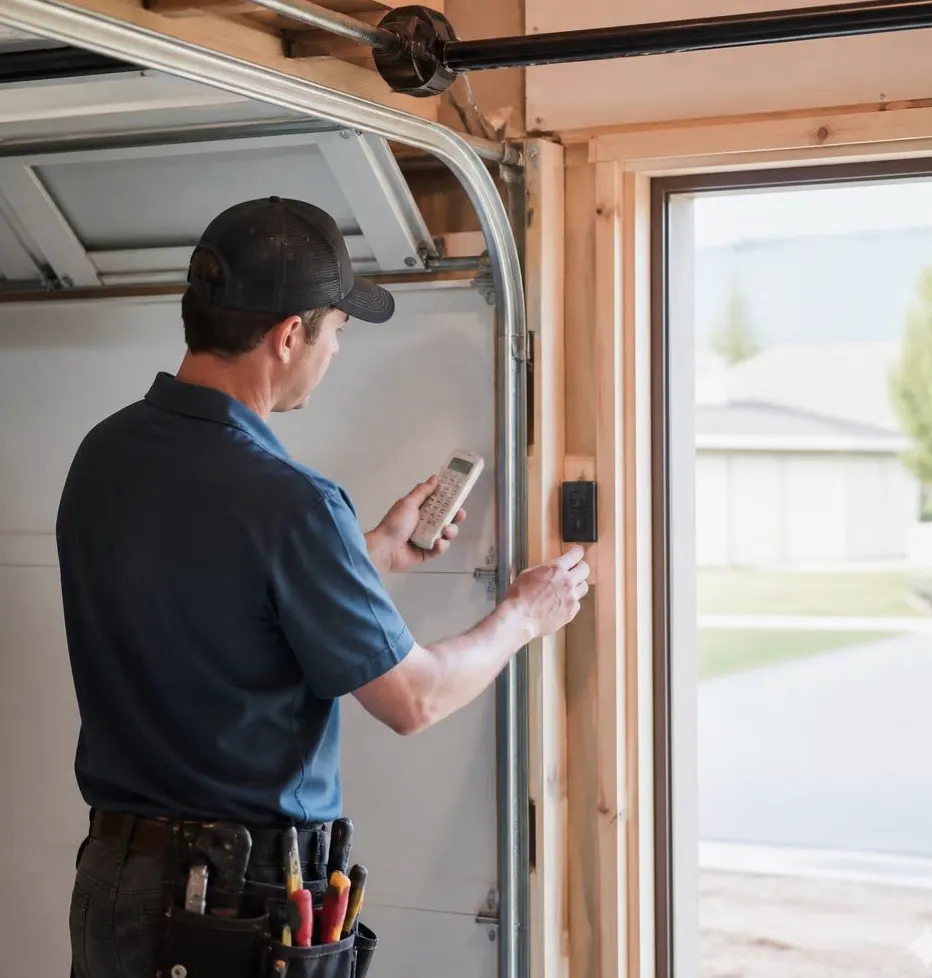
The Mistake Most People Make First
When a garage door opener starts clanking, grinding, or booming through the house every time it runs, the first instinct is almost always to grab a can of WD-40 and spray it on everything that moves. It's cheap, it's fast, and it feels like you're doing something. The problem is that WD-40 is a solvent and water-displacer, not a lubricant. It strips whatever grease is already on your rollers, hinges, and chain, and it attracts dust and grit instead of repelling it. In a Columbus garage, where road salt and sand get tracked in all winter and humidity swings hard every summer, that grit builds into a gritty paste on your hardware within a few weeks. The noise doesn't just come back. It gets worse.
Here's a real, step-by-step way to quiet a loud opener, with a clear line between what you can safely handle yourself and what should go to a technician.
Tools You'll Need
- Flashlight or headlamp
- Sturdy stepladder
- Work gloves
- Socket wrench or ratchet set (common sizes, 7/16" and 1/2" cover most hardware)
- Lithium-based garage door lubricant (not WD-40, not household oil)
- Clean rags
- Rubber vibration isolator kit (sold for garage door openers)
Step 1: Diagnose Before You Fix Anything
Run the door up and down once while you stand near it, not in the garage path, and listen. A rattle usually means loose hardware. A grinding or scraping sound points to dry rollers or a damaged track. A loud bang through the ceiling and walls of the house often means the opener itself is transmitting vibration into the framing. Popping or a metallic "clunk" near the top of the door's travel can be a spring issue, which is a different problem entirely and not one to chase with lubricant.
Step 2: Tighten Every Bolt You Can Reach
Garage doors flex every time they open and close, and Columbus's big seasonal temperature swings make metal expand and contract, which slowly works bolts loose. With the door closed, go along the track brackets, hinges, and the opener's mounting rail with your ratchet and snug everything up. Don't overtighten; you're just removing play, not crushing the hardware.
Step 3: Lubricate the Right Parts the Right Way
Apply lithium-based garage door lubricant to the hinges, the roller stems (not the wheels themselves if they're nylon), the torsion spring, and the opener's chain or screw drive. Wipe off excess with a rag so it doesn't drip and collect dust. Do this once in the fall before winter grit season and again in spring after storm season, and you'll head off most of the squeaking before it starts.
Step 4: Check Your Rollers
Steel rollers are loud by nature and get louder as they age, especially once winter salt and moisture start pitting them. If yours are steel and the door is more than a few years old, swapping them for nylon rollers with sealed bearings is one of the single biggest noise reductions a homeowner can make. This is a DIY-friendly job on most doors: replace one roller at a time so the door stays supported, loosen the roller bracket, slide the old roller out, and seat the new one. Leave the bottom brackets alone if you're not confident, since those are under spring tension.
Step 5: Adjust Chain or Belt Tension
A chain-drive opener that sags will slap against the rail with every cycle. Most openers have a tensioner nut on the rail near the motor unit. Check your owner's manual, but generally you want about a half-inch of play, no more. Over-tightening puts stress on the motor and the trolley.
Step 6: Isolate the Opener from the Ceiling
If the loudest sound is actually the thump transmitted into the attic and bedrooms above, a rubber vibration isolator kit between the opener's mounting bracket and the ceiling joist absorbs most of that shock. This is a simple swap of hardware you already loosened in Step 2, and it makes a noticeable difference in houses where the garage sits under or next to living space.
Where DIY Ends
Everything above is reasonable for a homeowner with basic tools and an afternoon. What's not: adjusting or replacing torsion springs, realigning a track that's bent or pulling away from the wall, rewiring opener electronics, or doing a full belt-drive conversion. Springs are under enough tension to cause serious injury, and a belt-drive swap usually means remounting the whole opener unit and recalibrating travel limits and force settings, which is easy to get wrong in a way that strains the motor or the door itself.
When to Call Columbus Garage Door Pro
If you've tightened, lubricated, and swapped rollers and the door is still loud, or if you're hearing grinding near the springs or a grinding that didn't go away after lubrication, it's time to call in a technician. Columbus Garage Door Pro handles Garage Door Maintenance visits that catch wear before it turns into a breakdown, and Garage Door Opener Repair & Installation for households ready to move to a quieter belt-drive system, which is a common upgrade for attached garages and finished rooms above them. A technician can also tell the difference between a noisy roller and an early spring failure, which isn't something to guess at.
If your garage door opener in Columbus, Westerville, Dublin, or anywhere nearby is still louder than it should be, give Columbus Garage Door Pro a call. We'll track down the real cause and fix it right the first time.